
Serengeti National Park Guide
14,763 sq km of grassland, home to the Great Migration.
Serengeti Facts
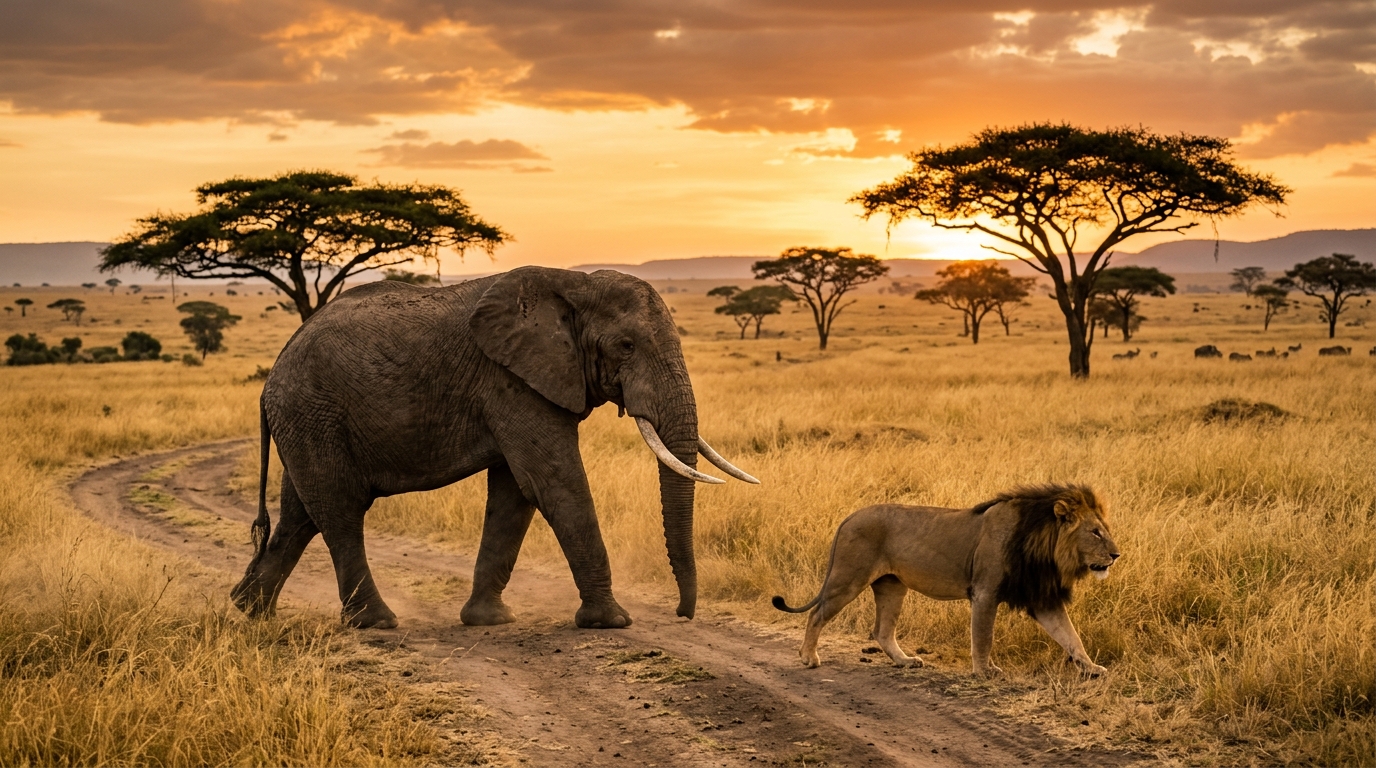
"Siringet" is Maasai for "endless plain" — home to roughly two million migrating animals and one of the largest lion populations left in Africa (about 3,000). The park splits into open grassland in the southeast, woodland in the north, and mixed terrain in the west.
Safari Routes & Highlight Areas
Two to three days lets you experience a bit of everything.
Ndutu Lake Area
December–May calving grounds where wildebeest give birth by the thousands, framed by acacia trees and rich birdlife.
Moru Kopjes
Ancient granite outcrops on the migration path — rainwater pools here draw lions, leopards and game year-round.
Simba Kopjes
Named for the lions that bask on its rocks; also a good spot for baboon, giraffe and birdlife.
Central Serengeti Plains
Endless mineral-rich grassland where over 80% of wildebeest give birth — the park's iconic open-horizon view.
Seronera Valley
Rivers and kopjes make this the most rewarding game-drive circuit, with a Visitor Centre nearby.
Western Corridor
Best May–July for dramatic Grumeti River crossings, with colobus monkeys and giant crocodiles along the banks.
Northern Serengeti / Lobo
Scenic hills and outsized lion prides, plus front-row migration views July–Sept and Nov–Dec.
When To Visit
The Serengeti rewards visitors year-round. Short rains fall November–mid-December, long rains March–May, but game viewing rarely suffers.
Plan Your Serengeti Safari
We'll match your dates to the best migration action and lodge options.
Get in Touch